


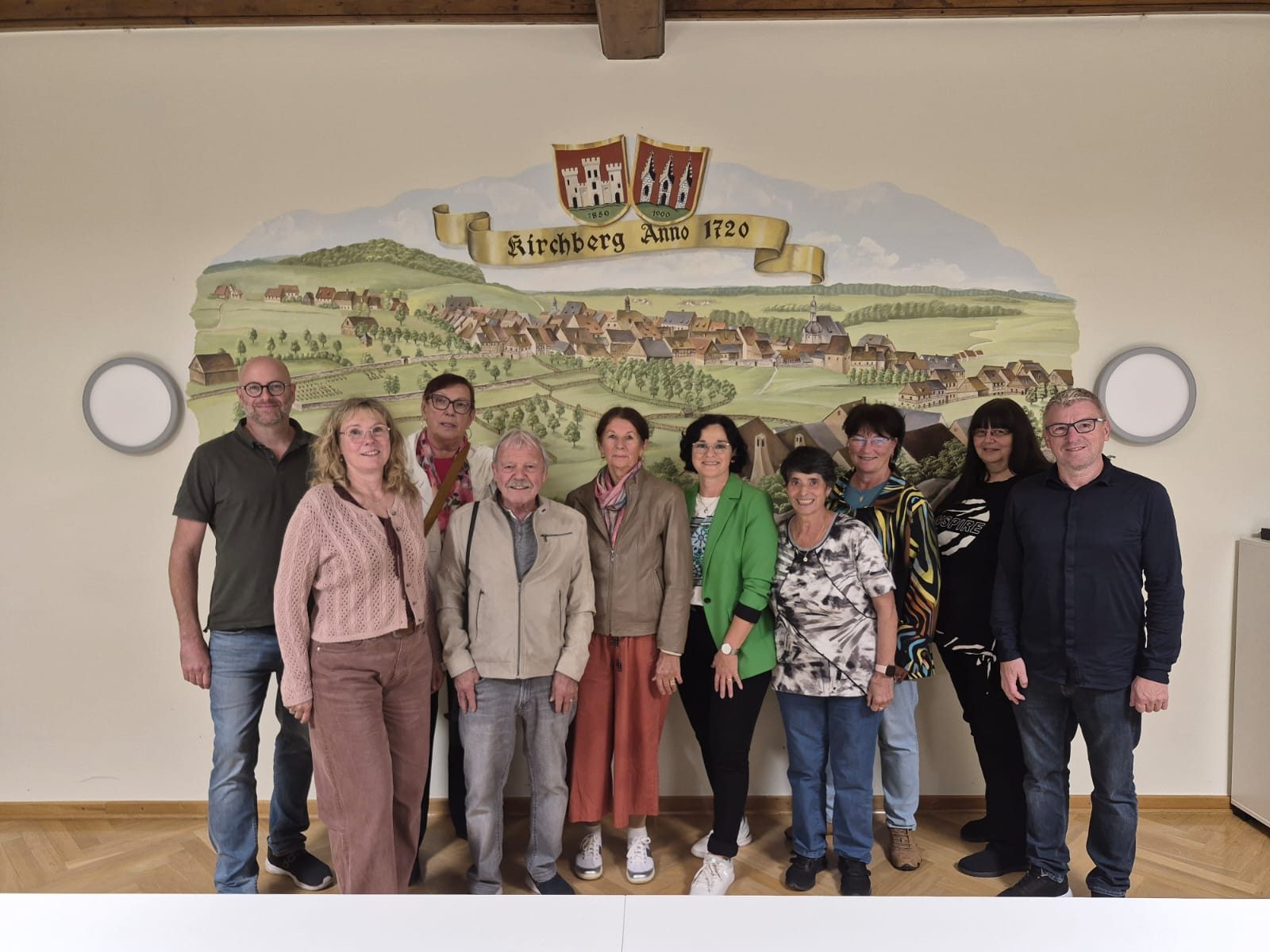
From 2 to 4 October 2026, nine members of our association set off for Saxony in the town’s community bus, invited by Mayor Dorothee Obst to visit our German partner town of Kirchberg in Saxony. Known as the “town of seven hills”, Kirchberg lies in the Rödelbach valley in the district of Zwickau and is made up of six districts. What awaited us there was a weekend full of history, culture and a hospitality that came from the heart from the very first moment.
The bond between Groß-Umstadt and Kirchberg goes back to the time of German reunification: as the Wikipedia article on Kirchberg (in German) records, the partnership has existed since 1990. Our twinning with Saint-Péray dates back to 1966, Santo Tirso has enriched our network since 1988, and Dicomano completed our European cloverleaf in 2010. Kirchberg, by contrast, is our friendship right in the middle of Germany, and on the very same weekend two other members were at the Asso Twinning Festival 2026 in Lombardy. Rarely has our association been spread so widely across Europe.
Brick giants in the Vogtland: the Elster and Göltzsch viaducts
The journey itself already held special impressions. Our first stop took us to the Elster Valley Viaduct, whose mighty brick arches rise out of the autumn greenery. On the platform right next to the piers we felt almost tiny beside the structure.
Shortly afterwards the Göltzsch Viaduct awaited us, regarded as the largest brick bridge in the world. Both bridges are among the most important historic monuments of Saxon engineering. If you would like to learn more about the history of this giant, you will find it in the Wikipedia article on the Göltzsch Viaduct.
Mödlareuth: a village they call “Little Berlin”
A thought-provoking highlight of the outward journey was our visit to Mödlareuth. From 1949 the inner-German border ran right through this small village, which today has around 50 inhabitants. Wall, barbed wire and watchtower made the division of Germany so directly visible here that Mödlareuth still bears the nickname “Little Berlin”.
At the German-German Museum Mödlareuth we learned how, for decades, the border separated families, neighbours and friends. Old signs reading “Achtung! Bachmitte Grenze” (Attention! Border runs along the middle of the stream) tell this story, as does the telegram of a family who had fled and briefly informed their relatives: “We are now in West Germany, we have arrived safely”.
A section of the original wall still stands outside. For us this stop was moving and instructive at the same time, because it shows how precious open borders are, in Germany just as much as throughout Europe.
A warm welcome in the town of seven hills
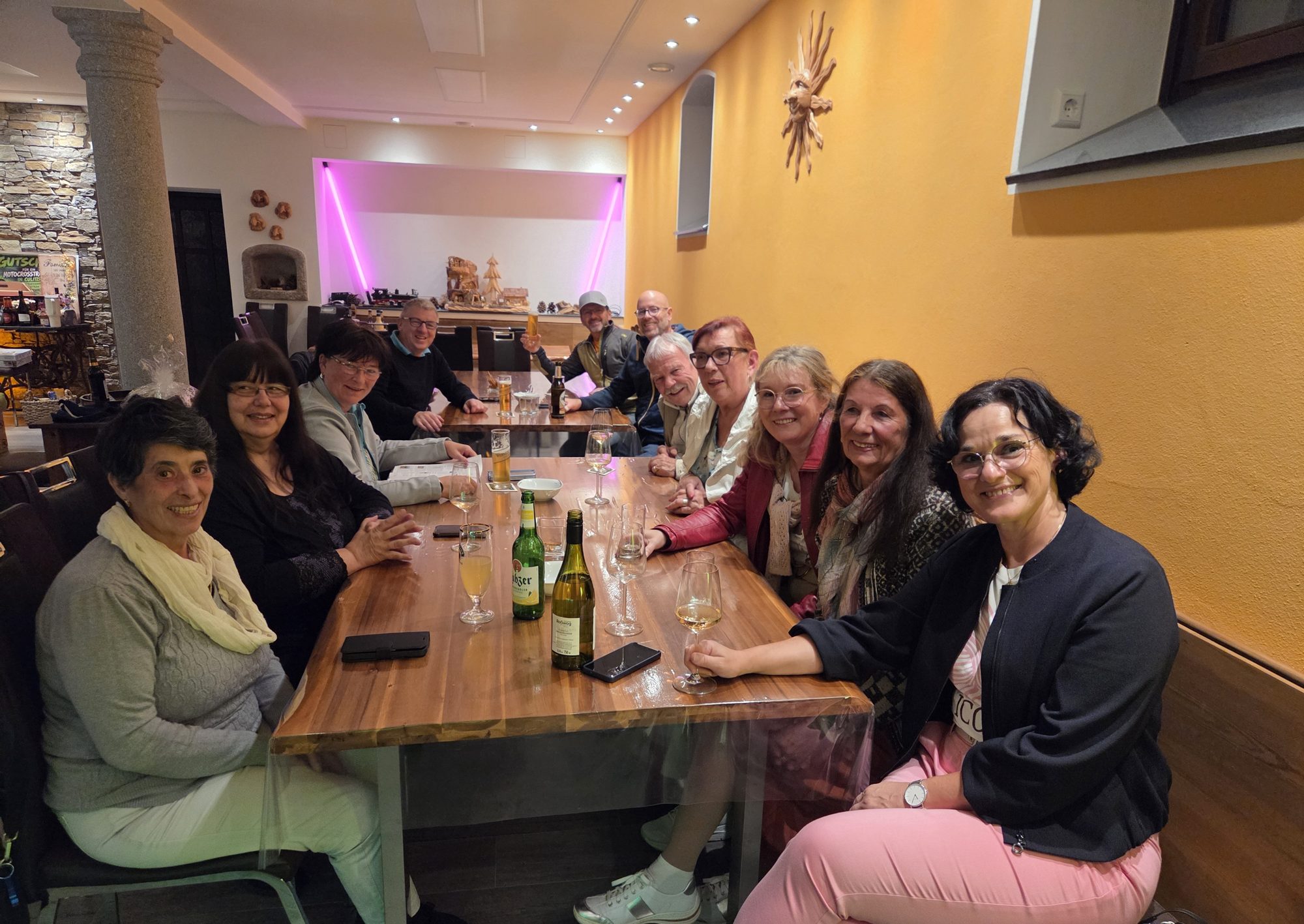
In the evening we finally reached Kirchberg, where Mayor Dorothee Obst and her husband Heiko Obst gave us a warm welcome. Over dinner together in a traditional restaurant there was plenty of storytelling and laughter, and we were already thinking about how our two towns can work together in the future.
Also at the table were secretary Angela Schott and Karin Ulich, who is responsible for public relations, each with their partners. Both have put great effort into the town partnership and into looking after us guests from Groß-Umstadt, and we are very grateful to them for that.
Even on this first evening it became clear that the bond between Groß-Umstadt and Kirchberg is far more than an official partnership. It lives from personal contact, mutual appreciation and people meeting one another.
Saturday: firefighters, team spirit and a pinch of Saxon
Our Saturday in Kirchberg in Saxony began on a sporting note. At the district-wide fire brigade competition we watched the different groups, from the youth fire brigade to the experienced teams, and marvelled at their skill, their commitment and their team spirit. Hoses were coupled in no time, pumps were started, and there was loud cheering from the sidelines.
One team’s T-shirts, emblazoned in big letters with “Dadüdada Danden”, brought a broad smile to our faces. For anyone who doesn’t speak Saxon: it means “TaTüTaTa Tanten”, roughly the “Nee-Naw Aunties”, after the sound of the siren, and with that the ladies had won our hearts.
The Meisterhaus: where Kirchberg’s cloth makers live on
Afterwards Mayor Dorothee Obst showed us around the Meisterhaus. Under her guidance, the former house of the cloth weavers was saved from demolition and lovingly renovated. Today it is home to the library, rooms for art exhibitions, the textile and local history museum and the exhibition of Kirchberg’s model railway club.
On the tour we learned a great deal about the history of Kirchberg, where cloth making was the most important trade for centuries. We were particularly impressed by the artfully carved guild door of the cloth makers, as well as by a delicate bouquet of flowers made entirely of bobbin lace.
Between rough stone walls, a collection of uranium glass glowed under black light in an almost unreal green. And we could have stood much longer in front of the lovingly designed model railway “De Bimm”.
Kirchberg old town festival: miners’ music and a fire pump with a sense of humour
In the afternoon the Kirchberg old town festival was on the programme, and Kirchberg in Saxony showed itself from its most cheerful side. Street artists, craftspeople, clubs, music groups, local businesses and caterers turned the old town into a colourful festival ground with lots of culinary delights.
Musically, the festival was shaped by the Schneeberg miners’ band in their magnificent miners’ uniforms with red plumes. Right next to it, a historic fire pump of the Kirchberg volunteer fire brigade, hitched to a green tractor, greeted visitors with the motto “Nicht zu schnell, sonst brennts nicht hell!” (Not too fast, or it won’t burn bright!).
There were also many free activities for the youngest guests. Mayor Obst stressed how important it is to her that these activities are free for children and therefore open to all families. A thought we liked very much.
An evening in the party cellar and the miners’ song
In the evening we were guests of Dorothee and Heiko Obst at their home. In a cosy circle in the party cellar a lively exchange developed, with lots of stories, laughter and talk about the future of the friendship between our towns.
The mayor herself provided a very special finale: she struck up the Steigerlied (in German), the traditional song of Saxon mining. Together we let the eventful day draw to a close in a warm-hearted atmosphere.
What Kirchberg in Saxony means to us
On Sunday the farewell was just as heartfelt. These days together gave us many new impressions and personal encounters and showed once again how important such visits are for a living town partnership.
The stop in Mödlareuth in particular reminded us that understanding can never be taken for granted. International understanding, cultural exchange and a humanist worldview, the goals of our non-profit committee, do not begin at Europe’s borders but wherever people from Hesse and Saxony sit at the same table. That is why Kirchberg complements our partner towns in France, Portugal and Italy in a very special way.
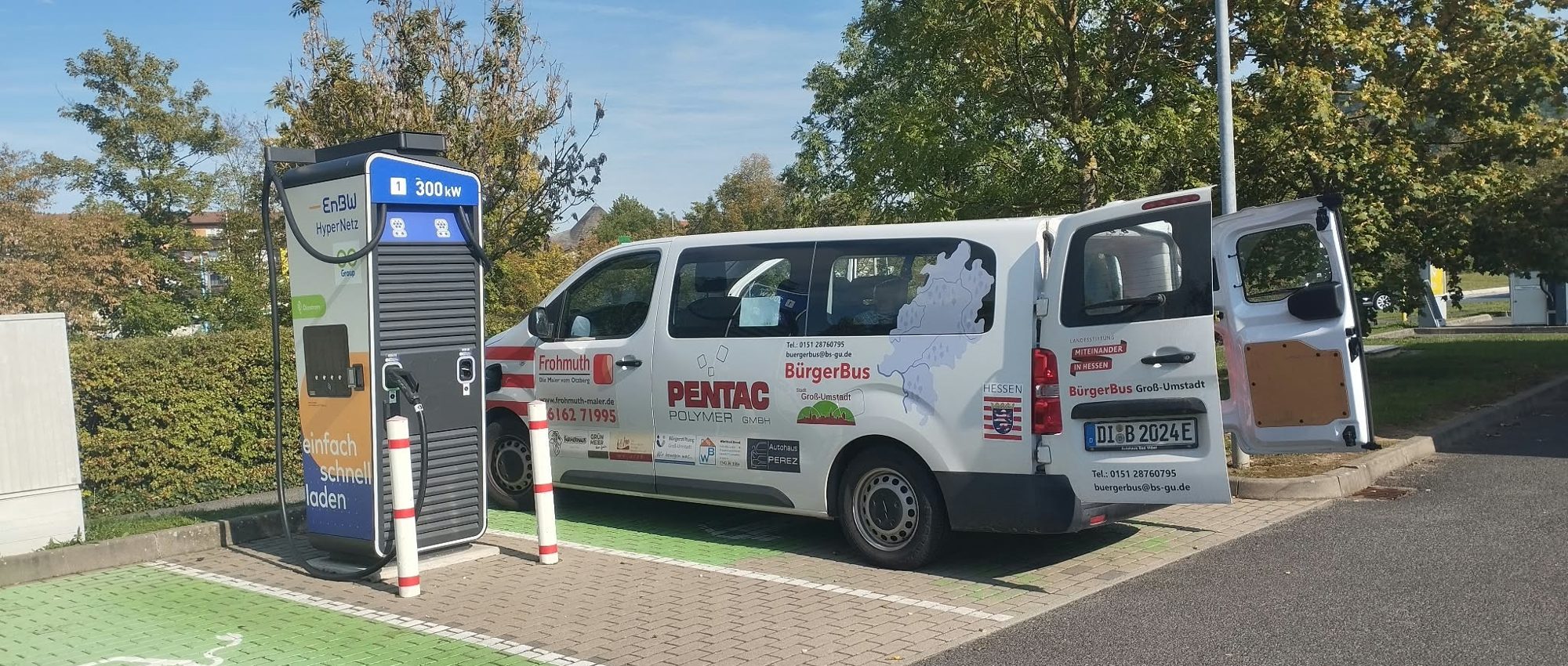
Special thanks go to the town of Groß-Umstadt, which provided us with the community bus. Our association covered the costs of the journey, and with a few charging stops the bus brought us safely back to the Odenwald wine island.
Join us on the bus trip to Kirchberg
Plans for a reunion are already in place: next year an organised bus trip to Kirchberg is to take place. This will give more interested citizens the opportunity to get to know Kirchberg in Saxony and, above all, its open-minded and hospitable people.
If you would like to come along, keep an eye on our events calendar or drop by one of our regulars’ tables, for example on 14 or 25 October, and let us tell you about the trip. And if you want to experience friendship across borders for yourself, become a member now and help us shape an open, friendly Europe.



Kirchberg in Saxony: heartfelt days between border wall, weavers’ house and miners’ song
No comments yet. Be the first!